A.I. PRIME - Article
Agentic AI vs Traditional Automation: When to Choose Each for Maximum Impact
A comparative analysis identifying scenarios where agentic AI outperforms rule based automation and how to choose the right approach.

Organizations today face a critical choice between AI-driven systems and rule-based automation tools. This decision shapes where leaders invest time, budget, and change management energy. Agentic AI systems that act autonomously and adaptively can outperform traditional automation in specific scenarios, but the choice requires careful evaluation. This article examines when agentic AI delivers measurable advantages, identifies trade-offs, and provides a practical decision framework for founder-led teams and small B2B operators.
Throughout this analysis, we identify scenarios where agentic AI drives superior outcomes, explain the limitations of each approach, and outline a clear decision framework you can use to select the right solution. Readers will gain actionable steps for evaluating use cases, piloting agentic AI, measuring impact, and managing risks while maintaining alignment with business goals and compliance needs. The intent is to make the agentic AI versus traditional automation discussion operational so you can choose solutions that deliver measurable value quickly.
Understanding the Distinction: Rule-Based Systems vs. Agentic AI
To make informed choices, you must first understand the practical differences between agentic AI and traditional automation. Traditional automation refers to rule-based systems or scripted workflows that perform predefined tasks under deterministic conditions. These systems excel where tasks are repetitive, structured, and predictable. They scale linearly and are easy to audit, making them a staple for compliance-oriented processes. Learn more in our post on AI vs Traditional Automation: When Agentic AI Delivers Superior Outcomes.
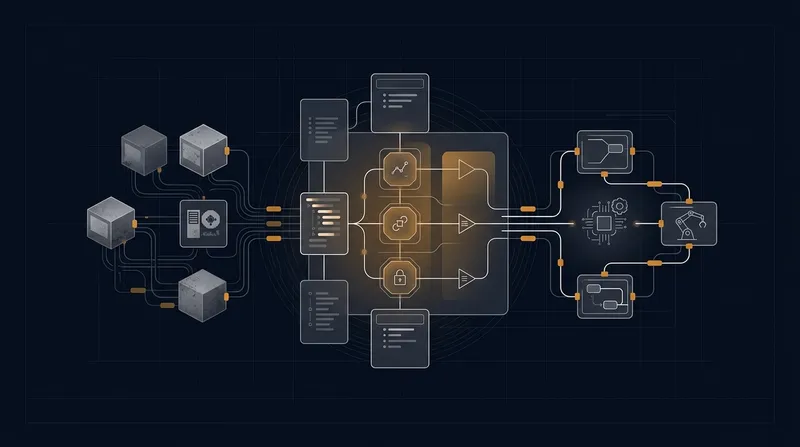
Agentic AI refers to systems that perceive context, reason about goals, and take multi-step actions - often across systems - with limited human intervention. Agentic AI uses machine learning models, planning, and feedback loops to adapt to novel situations. Unlike rule-based automation, agentic AI tolerates ambiguity, learns from experience, and can generate solutions when predefined rules are insufficient. That adaptability is why the comparison matters for problems that evolve rapidly or lack clear decision trees.
Key differences between the approaches span five critical dimensions. First, complexity management - traditional automation dominates for fixed processes while agentic AI excels with high-variance tasks. Second, maintenance overhead - rule changes are explicit and predictable for traditional automation while agentic AI requires model monitoring and periodic retraining. Third, transparency - rules are explainable and auditable while agentic AI requires explainability strategies to satisfy stakeholders. Fourth, speed of deployment - rules can be implemented rapidly for known tasks while agentic AI demands more upfront data and experimentation. Fifth, potential upside - agentic AI can unlock novel efficiencies by handling cases that rules cannot anticipate.
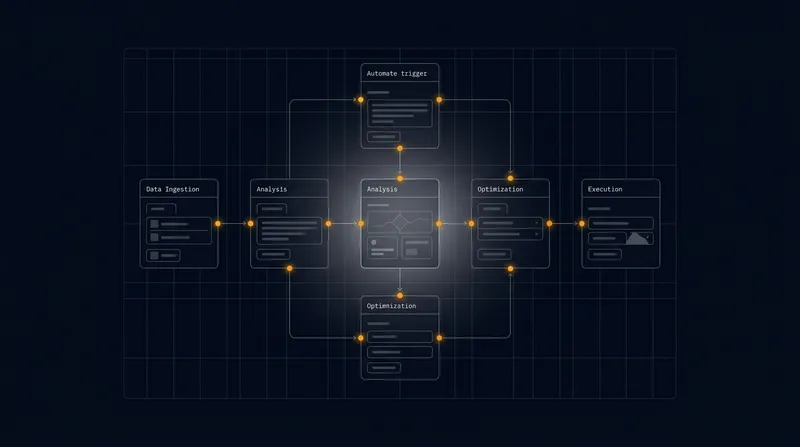
In practice, the ideal approach is rarely absolute. Many organizations find hybrid architectures where rule-based automation handles predictable workload while agentic AI handles exceptions and complex decision-making. The rest of this article focuses on when agentic AI offers clear advantages, how to evaluate fit, and practical steps to implement it responsibly.
When Agentic AI Delivers Superior Outcomes
Agentic AI produces superior outcomes when tasks require contextual understanding, long-horizon planning, or adaptive problem-solving. Examples include dynamic optimization where conditions change frequently, customer support requiring personalized multi-turn dialogue, and knowledge work involving research and synthesis. In these scenarios, agentic AI provides two core benefits: the ability to generalize from limited data and the capacity to coordinate actions across multiple systems. Learn more in our post on Cost Modeling: How Agentic AI Lowers Total Cost of Ownership vs. Traditional Automation.
Consider knowledge work where experts synthesize diverse sources to create strategy briefs. Traditional automation can pull documents and run keyword searches. Agentic AI can read documents, infer relevance, synthesize summaries, and propose next steps reflecting strategic priorities. That difference matters when outcomes depend on interpretation, judgment, and prioritization. When organizations compare agentic AI to traditional automation for knowledge-intensive tasks, agentic AI often reduces time to insight and improves recommendation quality.
Customer experience is another area where agentic AI shines. Rule-based chatbots follow decision trees and escalate on exceptions. Agentic AI can hold multi-turn conversations, understand sentiment, route tasks to correct backend systems, and take autonomous steps like scheduling requests or initiating refunds subject to governance. The result is lower resolution time, fewer handoffs, and higher satisfaction. As volume and variability increase, comparing agentic AI to traditional automation often tilts in favor of agentic systems.
Operations and support benefit when agentic AI handles variability. Traditional automation enforces static thresholds and reorder rules. An agentic AI that models uncertainty and constraints can proactively route work, prioritize cases, and balance competing objectives. This transforms reactive firefighting into proactive optimization, delivering superior operational and financial outcomes.
Sales and lead follow-up represent high-impact use cases for founder-led teams. Traditional automation sends templated emails on schedules. Agentic AI can read prospect signals, personalize outreach, qualify leads based on engagement, and autonomously schedule follow-ups. This increases conversion rates and reduces manual effort. When comparing agentic AI to traditional automation, the agentic approach often delivers faster response times and higher qualification accuracy.
Data interpretation and pattern detection benefit from agentic AI. Traditional automation pipelines process structured records efficiently. Agentic AI can infer structure from unstructured text and signals, then integrate them to detect subtle patterns or anomalies. For compliance monitoring, quality assurance, or predictive issues, the agentic approach uncovers edge cases that static rules miss.
Performance measurement clearly matters. When evaluating agentic AI versus traditional automation, focus metrics on outcome quality, not just throughput. Measure resolution time, accuracy, customer satisfaction, error rates, and downstream financial impact. Agentic AI may have higher initial cost but can deliver superior normalized outcomes when improvements in decision quality lead to revenue increases or cost reductions that rules cannot unlock.

Limitations and Risks of Agentic AI Compared to Rule-Based Automation
While agentic AI can outperform rule-based automation in many scenarios, it introduces distinct limitations and risks. Understanding these limitations is crucial for making balanced decisions in the agentic AI versus traditional automation debate. First, complexity and unpredictability increase. Agentic systems can behave in unexpected ways, especially with out-of-distribution inputs. Organizations must invest in monitoring, explainability, and fallback rules to manage unexpected behavior. Learn more in our post on Agentic AI vs Traditional RPA: A Practical Framework for Choosing the Right Automation Strategy.
Second, regulatory and auditability concerns are more pronounced for agentic AI. Rule-based automation is inherently auditable because logic is explicit. Agentic systems require instrumentation to trace decisions, provide human-readable explanations, and produce evidence for compliance. In high-risk domains such as finance or healthcare, the lack of transparent decision traces can prevent agentic AI from replacing traditional automation without substantial governance controls.
Third, model drift and maintenance burden can be significant. Agentic AI relies on data quality and continuous monitoring. As data distributions shift, models degrade unless maintained. This creates ongoing costs for retraining, monitoring, and validation. Organizations must weigh these ongoing costs against performance gains when comparing agentic AI to traditional automation.
Fourth, safety and alignment issues require attention. Agentic AI may pursue goals in ways that conflict with business rules or legal constraints if not properly constrained. Designing robust guardrails and intervention points is a non-trivial engineering and governance task. Where strict adherence to policy is required, rule-based automation remains more straightforward to certify.
Fifth, dependency on data and compute resources can be a barrier. Agentic AI often needs large annotated datasets or advanced learning strategies plus significant compute for training and inference. Traditional automation frequently runs on inexpensive infrastructure and is less data-hungry. For smaller organizations or low-margin processes, the economics of agentic AI may not be favorable.
Lastly, human trust and change management must not be overlooked. Many teams trust deterministic rules because outcomes are predictable. Agentic AI introduces perceived uncertainty and can reduce operator confidence if not introduced carefully. Pilot programs, transparent reporting, and human-in-the-loop designs are essential to build trust. This human factor should be part of any evaluation of agentic AI versus traditional automation.
Choosing the Right Approach: Framework and Decision Criteria
Deciding between agentic AI and traditional automation requires a structured evaluation. Use a decision framework that assesses problem characteristics, data readiness, organizational capability, and regulatory requirements. The following criteria help determine where agentic AI versus traditional automation is appropriate.
- Task predictability: Evaluate whether the task is highly predictable and rule-based or variable and context-dependent. Choose traditional automation for deterministic, repetitive tasks and agentic AI for tasks requiring contextual reasoning.
- Data availability: Assess the quality, quantity, and variety of data. Agentic AI benefits from rich datasets including unstructured sources. When data is insufficient or expensive to collect, traditional automation may be preferable.
- Risk tolerance: Consider the impact of incorrect decisions. For low-risk, routine tasks, agentic AI can be piloted. For high-risk, regulatory tasks, favor rule-based approaches unless you can implement strong explainability and audit controls.
- Time to value: Estimate how quickly each approach can deliver results. Traditional automation often achieves fast wins. Agentic AI requires experimentation but can provide larger long-term gains.
- Maintenance capacity: Determine whether your team can support ongoing model operations. Agentic AI demands continuous monitoring and retraining. If capacity is limited, start with traditional automation or managed agentic solutions.
- Integration complexity: Review the number of systems and data sources to connect. Agentic AI that coordinates actions across systems can provide outsized value when integrations are complex. For single-system workflows, traditional automation is simpler.
- Explainability needs: If auditability and explainable decisions are required, choose approaches that support traceability. Agentic AI can be used with explainability layers, but that adds development time.
- Cost-benefit analysis: Evaluate not only implementation cost but also ongoing operational cost and potential upside. Agentic AI returns may justify higher initial investment in the right context.
To operationalize this framework, use a scoring matrix. Assign weights to each criterion based on strategic priorities, then score candidate use cases. Use threshold values to classify cases as ideal for traditional automation, agentic AI, or hybrid approaches. This process turns subjective debates into defensible investment decisions when comparing agentic AI to traditional automation.
For many use cases, a staged approach reduces risk. Begin by automating with rules to establish baseline efficiency and data collection. Then introduce an agentic AI pilot that handles exceptions or augments human decision-making. This hybrid path leverages the strengths of both approaches and simplifies change management.
Finally, include human-in-the-loop controls during early deployments. Let agents propose actions and require human approval for high-impact decisions. Over time, as confidence grows, you can increase autonomy. This incremental automation strategy balances the benefits of agentic AI while preserving reliability and trust.

Implementation Roadmap: From Pilot to Scale
Moving from evaluation to production requires a methodical implementation roadmap. Whether you are comparing agentic AI to traditional automation or planning hybrid deployments, the following phased plan helps convert pilots into sustained value.
Phase 1: Scope and define. Start by selecting a use case with measurable outcomes, accessible data, and moderate risk. Define success metrics such as time saved, error reduction, or revenue uplift. For an agentic AI pilot, set clear boundaries on permissible actions and escalation paths. Establish data access protocols and compliance checklists.
Phase 2: Data collection and preparation. Gather the data required for training, validation, and evaluation. Clean and label datasets, focusing on edge cases that will challenge your agent. If data is limited, consider transfer learning, few-shot techniques, or synthetic data generation. Traditional automation may run in parallel to capture structured datasets for baseline comparisons.
Phase 3: Model development and integration. Build or customize the agentic AI models and design interfaces to backend systems. Implement logging and explainability modules early. Include safety nets like hard-stop rules and manual override capabilities. Build lightweight APIs and connectors so the agent can take actions across systems while preserving control points.
Phase 4: Pilot and iterate. Deploy the agent in a controlled environment and monitor performance closely. Use A/B testing and canary releases to compare the agent against rule-based processes. Collect qualitative feedback from users to identify trust gaps and usability issues. Iterate rapidly, adjusting models, reward functions, and constraints.
Phase 5: Scale and operationalize. Once metrics demonstrate consistent improvement, transition the agentic AI to production. Invest in MLOps practices: automated monitoring, alerting, and retraining pipelines. Define clear roles for model owners, data engineers, and compliance leads. Maintain a governance board that reviews major updates and risk assessments.
Phase 6: Continuous improvement. Agentic AI thrives on feedback. Establish a cycle where operational data informs model updates and business teams propose new capabilities. Continuously compare performance against traditional automation baselines to ensure the agent continues to deliver superior outcomes where expected.
Throughout these phases, maintain documentation and a runbook for incidents. Define escalation matrices and rollback procedures. These operational safeguards make the difference between successful agentic AI deployments and costly failures. They also ease comparison of agentic AI to traditional automation by creating rigorous evidence about performance, reliability, and cost.
Case Studies and Use Cases: Practical Examples
Below are practical use cases showing when agentic AI outperforms rule-based automation and how hybrid deployments can maximize impact.
Customer support and triage: Rule-based systems route tickets based on keywords and simple workflows. An agentic AI can read ticket history, infer urgency, route to the right specialist, and propose resolution steps using internal knowledge bases. In pilot deployments, organizations often see faster resolution times, higher first-contact resolution, and improved customer satisfaction. When comparing agentic AI to traditional automation, the agentic approach reduces manual transfers and repetitive replies.
Sales follow-up and lead qualification: Traditional automation sends templated sequences on fixed schedules. An agentic AI can analyze prospect engagement signals, personalize messaging, qualify leads based on response patterns, and autonomously schedule follow-ups. This reduces time-to-first-response, improves conversion rates, and frees sales teams for higher-value activities. The agentic model can balance multiple objectives such as urgency, fit, and timing in ways that static rules cannot.
Procurement and vendor management: Traditional automation enforces approval thresholds and processes orders. An agentic AI can review supplier performance, predict shortages, and autonomously initiate negotiations or suggest alternative vendors. This reduces lead time and cost. The agentic model can balance multiple objectives such as cost, quality, and delivery risk in ways that static rules cannot.
Fraud detection and compliance: Rules identify known fraud patterns but are brittle against novel attacks. Agentic AI fuses structured transaction data with unstructured notes and external signals to detect suspicious activity in real time. The agent can propose investigations, gather evidence, and prioritize cases. When comparing agentic AI to traditional automation in this domain, agentic systems reduce false negatives and adapt to evolving threat patterns.
Field service and scheduling: Traditional scheduling uses fixed slots and rules for technician assignment. Agentic AI optimizes schedules accounting for skills, traffic, and customer preferences and can reassign tasks dynamically in response to delays. The result is higher utilization, lower travel time, and better customer experience. Agentic AI handles complexity that rules cannot elegantly express.
Product personalization and recommendations: Rule-based personalization uses segments and static rules. Agentic AI personalizes at the individual level, synthesizing behavior signals and contextual factors. The agent can run experiments, adapt recommendations, and coordinate cross-channel campaigns. When comparing agentic AI to traditional automation, the agentic approach often increases conversion rates, average order value, and customer retention.
These case studies show that agentic AI brings the most value when tasks are high-dimensional, require coordination, or benefit from continuous learning. Traditional automation remains preferred where transparency and predictability are paramount. Hybrid designs often provide the best overall outcome, combining determinism for core controls with agentic intelligence for complex decisions.

Actionable Checklist: How to Evaluate a Use Case
Use this checklist when you are deciding between agentic AI and traditional automation for a specific process. Apply it during scoping and pilot planning.
- Define the business outcome and success metrics, including qualitative and quantitative measures.
- Assess task predictability and variability across cases and over time.
- Inventory available data sources - structured and unstructured - and rate their quality.
- Estimate implementation and operational costs, including data engineering, model operations, and governance.
- Map regulatory constraints and explainability requirements.
- Evaluate potential upside from improved decision quality and reduced human effort.
- Identify integration points and required APIs or connectors.
- Design a pilot with clear rollback paths, manual overrides, and human-in-the-loop checkpoints.
- Plan for monitoring, alerting, and retraining schedules post-deployment.
- Set a review cadence to decide whether to expand, maintain, reduce, or retire the solution.
Organizational Readiness and Change Management
Successful adoption of agentic AI depends on organizational readiness. When evaluating agentic AI versus traditional automation, consider capability gaps in data engineering, model operations, and governance. Investing in these areas pays dividends when scaling agentic systems. Key readiness signals include centralized data platforms, mature API infrastructure, and teams experienced in iterative development and experimentation.
Change management is equally important. Introduce agentic AI with clear communication about roles, expected outcomes, and controls. Train staff on how to interpret agent recommendations and how to intervene when necessary. Ensure reward systems incentivize collaboration with AI, not avoidance. Clear ownership of models and decision rights reduces friction and accelerates adoption.
Governance must be practical, not burdensome. Create policies for model validation, incident response, and periodic audits. Maintain a catalog of automated agents, their scope, and owners. Use cross-functional review boards to assess risk and approve expansions. This governance enables confident use of agentic AI while preserving compliance and ethical standards.
Measuring Success and Continuous Improvement
Establish measurement systems that reflect end-to-end impact, not just technical metrics. When assessing agentic AI versus traditional automation, consider leading indicators such as reduction in manual escalations, improvement in decision accuracy, and increases in throughput. Also monitor downstream effects like customer lifetime value, revenue per employee, and error remediation costs.
Operationalize feedback loops where live data informs ongoing model tuning and business rule updates. Use a safe testing environment for major changes and run controlled experiments to validate improvements. Publish regular reports to stakeholders covering performance, drift, risks, and new opportunities. This transparency supports better governance and sustained investment.
Conclusion
Choosing between agentic AI and traditional automation is not a binary decision. Agentic AI excels in environments that demand contextual reasoning, long-horizon planning, and adaptive behavior. It can deliver superior outcomes in customer experience, operations, sales follow-up, compliance monitoring, and knowledge work by generalizing across complex inputs, coordinating actions across systems, and learning from ongoing interactions. Traditional automation remains indispensable for deterministic, routine tasks that require transparent, auditable, and low-maintenance operation. It offers fast implementation, predictable costs, and robust compliance characteristics.
Leaders should use a structured decision framework to evaluate task predictability, data readiness, risk tolerance, and expected time to value. A pragmatic approach is to adopt hybrid architectures where rule-based automation handles core controls and agentic AI augments or takes on complex exceptions. This staged path reduces risk, accelerates learning, and builds organizational confidence. Implement pilots with clear metrics, human-in-the-loop controls, and strong instrumentation for monitoring, explainability, and safety.
Operational factors matter as much as technical ones. Invest in data infrastructure, model operations, and governance to manage model drift, explainability, and incident response. Prioritize use cases with measurable impact and manageable risk, and scale incrementally. Maintain a continuous improvement cycle that uses real-world feedback to refine models, reward functions, and integration behaviors. This practice ensures sustained performance gains and prevents surprise behavior in production.
Ultimately, the agentic AI versus traditional automation choice should be driven by business outcomes, not technology preference. Use careful measurement to compare operational cost, benefits, and revenue impact. When agentic AI proves superior in quality and economic return, scale it with disciplined governance and robust human oversight. When rules deliver sufficient performance, keep using them and focus agentic investments where they unlock new capabilities and strategic differentiation. By combining the strengths of both approaches, founder-led teams can create efficient, resilient processes that drive measurable operational value and competitive advantage.
Next step
Book the Opportunity Sprint