A.I. PRIME - Article
Autonomous Agents to Fix Inefficient Business Processes: A 14-Day Implementation Path
Learn how autonomous agents detect bottlenecks, prioritize fixes, and optimize workflows in just 14 days without heavy investment.

Founder-led teams and small B2B operators face a persistent challenge: repetitive, manual workflows that drain resources and slow response times. Autonomous agents offer a practical solution to identify bottlenecks, prioritize remediation, and execute fixes in a matter of days rather than months. This guide walks you through how case-ready autonomous agent services work to fix inefficient business processes with measurable speed and precision, without requiring heavy upfront investment or long disruption windows.
Using autonomous agents to fix inefficient business processes means deploying AI-powered systems that observe workflows, detect recurring blockers, and apply proven fixes automatically or through guided approvals. These agents surface hidden waste, prioritize what matters most, and execute remediation steps across systems and teams. The result is faster cycle times, fewer manual handoffs, and predictable improvements in service delivery and operational cost.
Below we walk through detection methods, prioritization frameworks, remediation patterns, a 14-day implementation roadmap, and metrics that founder-led teams need to adopt autonomous agents as case-ready services. The content is designed for CEOs, operations managers, and founders who want actionable guidance to fix inefficient business processes without long disruption windows or heavy custom development.
How Autonomous Agents Detect Inefficiencies in Your Workflows
Autonomous agents collect and analyze data across your processes to uncover waste and variability that human observers miss. They integrate with your project management systems, ticketing platforms, communication channels, and system logs to create a composite view of workflow health. This multi-source monitoring is critical to fix inefficient business processes because single-point observations rarely reveal root cause patterns. Learn more in our post on How Autonomous Agents Fix Inefficient Business Processes: A 14-Day Implementation Path.
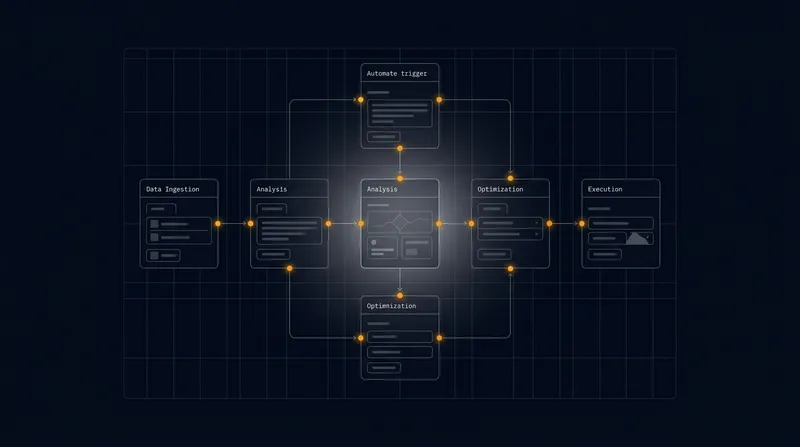
Detection starts with instrumentation. Agents tag events, record timestamps, and capture metadata from your existing systems. They map common process paths and identify deviations, then compute metrics such as wait time, rework rate, and throughput. With this timing and event data, autonomous agents pinpoint choke points where queues grow or handoffs stall. These quantitative signals are the first step to prioritize remediation and fix inefficient business processes with data-driven confidence.
Behavioral analysis complements timing data. Agents use pattern recognition to detect repeated manual corrections, frequent escalations, and recurring exceptions. These patterns often reveal policy gaps or misaligned responsibilities. By combining timing, volume, and behavior, agents build a prioritized list of problems most likely to impact your service levels and cost. When agents present these findings, your team gains a clear plan to fix inefficient business processes and reduce operational risk.
Key detection techniques
- Event tracing across systems to map process flow and handoffs.
- Statistical anomaly detection to find spikes in delays or failures.
- Sequence mining to surface repeated rework loops and exceptions.
- Correlation of human interactions with system events to identify where manual work adds delay.
- Root cause tracing to connect symptoms with upstream errors or constraints.
Autonomous agents can run these techniques continuously, which enables your organization to fix inefficient business processes proactively instead of reacting only after customer impact. Continuous detection also supports testing of remediation strategies so your team can measure what reduces delay and rework most effectively.

Prioritizing Bottlenecks: How Agents Decide What to Fix First
Not all inefficiencies are equal. To fix inefficient business processes effectively, autonomous agents use prioritization frameworks that consider impact, frequency, and fixability. Impact measures how much delay or cost a problem causes. Frequency measures how often it occurs. Fixability measures how quickly the issue can be remedied and whether remediation carries risk. Learn more in our post on How to Fix AI Workflow Failures: Diagnostics, Playbooks, and Recovery Steps.
Agents compute a priority score by combining these factors and adding context such as customer severity, regulatory exposure, and strategic importance. High-impact, high-frequency, and high-fixability items rise to the top. This prioritization ensures your scarce resources focus on changes that generate the biggest return. When agents recommend actions, stakeholders see quantitative justification to fix inefficient business processes rather than making intuition-based decisions.
Prioritization also includes dependency mapping. Some problems only make sense to fix after upstream issues are resolved. Autonomous agents build dependency graphs to prevent wasted effort on symptoms rather than root causes. By sequencing remediation tasks, agents help your team avoid rework and compound improvement across the entire process chain. This systemic approach is essential when the objective is to fix inefficient business processes at scale.
Prioritization components
- Impact assessment tied to SLAs, customer outcomes, and operating costs.
- Frequency analysis across periods to detect chronic versus one-off issues.
- Effort estimation including human and technical work required to deploy a fix.
- Risk evaluation to weigh potential side effects and rollback complexity.
- Dependency mapping to sequence remediation for maximal leverage.
With these components, autonomous agents deliver a ranked backlog of remediation tasks with clear business case estimates. Your team uses this backlog to plan sprints, allocate resources, and communicate expected improvements to stakeholders. The result is a disciplined pathway to fix inefficient business processes while maintaining service continuity.
Automated Remediation: Safe, Guided, and Auditable
Once agents detect and prioritize issues, the next step is remediation. Autonomous agents can automate a range of corrective actions depending on your governance and integration level. Low-risk changes such as reassigning tasks, updating status fields, or sending templated communications can be executed automatically. Higher-risk fixes require human approvals with guided playbooks to standardize corrective steps. Learn more in our post on Design Safe Reward Functions for Autonomous Agents: Essential Practices for Predictable Deployments.
Remediation automation relies on prebuilt playbooks and connectors to your systems of record. Agents execute playbooks that encapsulate best practice sequences: verify the issue, run corrective scripts, update records, and notify stakeholders. These playbooks are reusable, auditable, and version-controlled, which reduces the chance of ad hoc fixes that may introduce new problems. Using agents to run these playbooks helps your organization fix inefficient business processes faster and more consistently.
Orchestration coordinates multiple systems and teams during remediation. For example, resolving a support backlog might require task reassignment, customer notification, and knowledge base updates. Autonomous agents manage these parallel tasks, ensure handoffs occur, and escalate when time limits are exceeded. The orchestration layer enforces compliance and reduces friction, enabling your team to focus on exceptions that need judgment rather than routine corrections.
Automation patterns
- Safe fixes: automated updates that can be run without approval such as status changes, cache clears, and routine reconciliations.
- Guided fixes: playbooks that require a human sign-off before agents execute changes in live systems.
- Transactional fixes: multi-step sequences with rollback support and audit logs for compliance.
- Collaborative fixes: actions that coordinate cross-functional teams with scheduled checkpoints and shared context.
By adopting these patterns, your organization can strike a balance between speed and control. Autonomous agents enable controlled automation so your team can fix inefficient business processes at a pace that aligns with your risk tolerance and governance policies.

The 14-Day Case-Ready Implementation Path
Case-ready services package autonomous agents into deployable offerings that include templates, integrations, and governance playbooks. They allow your organization to accelerate the ability to fix inefficient business processes without building infrastructure from scratch. A case-ready approach bundles detection models, remediation playbooks, and measurement dashboards to create a repeatable implementation path that delivers results in two weeks.
The 14-day roadmap follows clear stages: discovery, pilot, deployment, and measurement. During discovery (days 1 - 3), agents are configured to collect data and baseline your process performance. You define success metrics and identify the highest-impact workflow to automate. The pilot (days 4 - 10) focuses on that limited scope where agents detect issues, prioritize them, and run a set of low-risk playbooks. Pilot results validate the approach and inform adjustments before wider rollout.
Deployment and measurement (days 11 - 14) expand agent coverage and integrate additional systems. Case-ready services provide templates for common B2B workflows such as support ticket triage, lead qualification, and invoice processing, reducing configuration time. Governance policies and role-based access control are applied so agents can run automated remediation within defined limits. You measure cycle time, cost savings, and customer satisfaction to prove impact. With these guardrails, your business can broaden automation and continue to fix inefficient business processes while maintaining control.
Roadmap steps
- Days 1 - 3 (Discovery): Instrument systems, define success metrics, baseline performance, and select pilot process.
- Days 4 - 7 (Pilot Setup): Configure agents, validate data quality, and test detection models on historical data.
- Days 8 - 10 (Pilot Execution): Run live detection and remediation on limited scope, collect results, and refine playbooks.
- Days 11 - 14 (Deploy & Measure): Expand coverage, integrate additional systems, measure KPIs, and prepare for scaling.
Case-ready services shorten time to value by providing proven playbooks and prebuilt connectors. They let your team fix inefficient business processes fast while preserving the flexibility to adapt playbooks to your unique constraints. The packaged approach also eases skills gaps since the service includes operational templates and best practice guidance.
Measuring Impact: Metrics That Matter to Founders
To sustain gains and justify investment, your organization must measure the impact of autonomous agents across multiple dimensions. Typical metrics include cycle time reduction, rework rates, number of escalations, cost per transaction, and customer satisfaction. Agents track these metrics continuously and tie improvements to specific remediation actions so your team can prove cause and effect when you fix inefficient business processes.
Measurement starts with a baseline. Before agents run remediation at scale, your team captures pre-intervention metrics. After remediation, agents report delta improvements and calculate time to recovery for incidents. By correlating remediation playbooks with metric changes, your organization learns which fixes deliver the greatest return. This empirical approach supports data-driven decisions to prioritize future work that will fix inefficient business processes further.
Continuous improvement uses closed-loop feedback. Agents log the outcomes of each action and feed results back into detection models and playbooks. If a playbook underperforms, the system flags it for review and suggests alternative strategies. Over time, this learning loop increases the accuracy of detection and the effectiveness of remediation so that your organization becomes better at fixing inefficient business processes with each iteration.
Recommended KPIs
- Average process cycle time and change over baseline (e.g., support ticket resolution time, lead response time).
- Percentage reduction in manual handoffs and human touches per transaction.
- Rate of recurring exceptions before and after remediation.
- Cost savings per period attributed to automation (labor hours reclaimed, error reduction).
- User and customer satisfaction scores related to process speed and quality.
By tying agent interventions to these KPIs, your team can build a business case for wider adoption and demonstrate the strategic value of autonomous agents as a tool to continuously fix inefficient business processes.

Operationalizing Autonomous Agents Safely
Adopting autonomous agents requires careful operational controls to ensure safe and effective remediation. Your organization must establish governance that defines what agents can do automatically and what requires human oversight. Role-based permissions, approval workflows, and audit logging provide traceability and reduce the risk of unintended changes.
Testing and validation processes are critical. Before deploying a playbook into production, agents should validate changes in a staging environment and run simulations to ensure no downstream processes break. Canary deployments and phased rollouts further limit exposure. These safeguards let your team fix inefficient business processes without sacrificing reliability or compliance.
Another operational priority is transparency. Agents should generate clear, human-readable action logs and provide context for decisions so your operators can understand why a remediation ran and what it changed. This clarity builds trust and makes it simpler to troubleshoot unexpected outcomes. When operators can review agent reasoning and results, they can approve broader automation with confidence.
Safety checklist
- Define clear automation boundaries and approval thresholds for different risk levels.
- Implement role-based access control and separation of duties.
- Run staging tests and simulations before production deployment.
- Use phased rollouts and monitoring for early detection of issues.
- Maintain detailed audit logs and human-readable explanations of agent actions.
Operational discipline ensures agents remain a tool for making sustained improvements and to fix inefficient business processes while preserving control and accountability across your organization.
Change Management and Team Adoption
Successful adoption of autonomous agents is as much about people as it is about technology. To fix inefficient business processes, your team needs clear communication, training, and incentives that encourage the use of agent recommendations. Change management plans should address common concerns such as job displacement, loss of control, and trust in automation.
Start with stakeholder alignment. Engage your leaders and frontline staff early to define desired outcomes and acceptable automation boundaries. Provide training that focuses on how agents reduce repetitive work and improve daily productivity. Use pilot results to create quick wins that illustrate benefits and build momentum to fix inefficient business processes more broadly.
Adoption also benefits from governance forums where your operators review agent recommendations and refine playbooks. These forums help create a culture of continuous improvement and shared ownership. When your team participates in shaping agent behavior, they are more likely to accept automation and collaborate to scale solutions that fix inefficient business processes throughout your organization.
Adoption tactics
- Communicate benefits through case studies and pilot results from your own operations.
- Offer hands-on training and simulation environments for operators to build confidence.
- Provide clear escalation paths for contested agent actions and feedback mechanisms.
- Recognize teams and individuals who contribute to successful remediation outcomes.
Combining technical enablement with strong change management ensures that autonomous agents become an enabler to fix inefficient business processes rather than a source of friction or skepticism.
Common Obstacles and Practical Solutions
Introducing autonomous agents to fix inefficient business processes can surface obstacles. Common challenges include poor data quality, fragmented systems, lack of process documentation, and cultural resistance. Each challenge has practical mitigations that preserve momentum and reduce risk.
Poor data quality is often the first barrier. Agents rely on accurate timestamps, consistent event names, and complete records. Where data is inconsistent, your team should implement lightweight data contracts and validation rules. These fixes not only improve agent performance but also yield immediate improvements in reporting and operational clarity to fix inefficient business processes.
Fragmented systems can limit agent visibility. Integrating connectors and using middleware can create a unified event stream. When direct integration is not possible, agents can use process mining techniques on exported logs to reconstruct flows. This approach allows your team to start fixing inefficient business processes even before full integration is complete.
Lack of documentation makes it harder to map processes and determine expected behaviors. Simple process mapping sessions with your stakeholders provide the necessary context. Agents can then use these maps to align detection rules and playbooks. This combined human-plus-agent approach accelerates progress to fix inefficient business processes.
Cultural resistance often arises from fear of automation. Mitigation includes transparent communication, demonstration of quick wins, and positioning agents as assistants that remove repetitive tasks. Involving your users in playbook design helps build ownership. Over time, visible improvements in workload and throughput make it easier to adopt agents that fix inefficient business processes.
Mitigation strategies
- Improve data quality through validation, contracts, and remediation rules before scaling agents.
- Bridge system gaps with connectors or log-based process mining to create unified visibility.
- Collaborate on process mapping to inform agent behavior and set realistic expectations.
- Use transparency and inclusion to reduce cultural resistance and build trust in automation.
By anticipating these challenges and applying practical mitigations, your organization can maintain momentum and progressively fix inefficient business processes across the enterprise.
Real-World Outcomes and ROI for Founder-Led Teams
Organizations that adopt autonomous agents and case-ready services to fix inefficient business processes see measurable gains. Typical outcomes include reduced cycle times, lower operational costs, improved throughput, and higher customer satisfaction. The payback period is often weeks to months rather than years when agents focus on high-impact, repeatable problems.
ROI calculations should include labor savings from reduced manual work, cost avoidance from fewer escalations, and revenue gains from faster time to customer. Agents also reduce error rates, which lowers remediation costs and improves quality. By linking agent activities to financial and operational KPIs, your team can make a strong business case to scale investments that fix inefficient business processes.
Beyond direct financial impact, agents enable your team to refocus on strategic work. Removing repetitive low-value tasks increases employee engagement and frees capacity for innovation. These qualitative benefits compound over time and make continuous improvements easier to implement, further enhancing the ability to fix inefficient business processes across departments.
Steps to quantify ROI
- Establish baseline metrics for cost, time, and error rates before automation begins.
- Tag agent interventions to specific KPI changes to demonstrate causation and impact.
- Run controlled pilots to estimate improvement rates and scale projections across your business.
- Include both direct cost savings and indirect benefits such as reduced churn in ROI models.
Using these steps, your decision makers can evaluate the return on investment and prioritize expansions that will continue to fix inefficient business processes and create cumulative organizational value.
Getting Started: Your First 14-Day Engagement
Leaders ready to adopt autonomous agents to fix inefficient business processes should follow a pragmatic plan. Start small with a high-impact area, validate results, and expand coverage in waves. A clear governance model and a focus on measurable outcomes are essential to sustain momentum and build trust in the automation capability.
Begin by selecting a pilot that has a known pain point, measurable metrics, and willing stakeholders. Instrument that process, run detection models, and let agents propose prioritized remediations. Use safe automation patterns to implement early wins and collect evidence. These early results will form the basis for scaling and for constructing a more comprehensive case-ready service offering tailored to your organization.
Finally, invest in skills and change management. Train your operators to interpret agent recommendations and maintain playbooks. Create forums for continuous feedback and refinement. With steady iteration, you can embed autonomous agents into operations and consistently fix inefficient business processes while building a culture that embraces data-driven improvement.
Conclusion: Transform Your Operations in 14 Days
Autonomous agents and case-ready services provide a clear pathway to fix inefficient business processes in a way that is scalable, measurable, and low-risk. By combining continuous detection, prioritized remediation, automated playbooks, and robust governance, your organization can reduce the friction that slows operations and impedes growth. The approach is designed to produce rapid wins through focused pilots and then to expand in a controlled manner so that improvements compound across your enterprise.
To be successful, your team must treat agent adoption as a holistic program that includes technical integration, process mapping, governance, and change management. Agents are most effective when they operate with high-quality data, when remediation playbooks are well-tested, and when stakeholders participate in shaping agent behavior. This alignment helps to ensure that agents act as amplifiers of human expertise and not as opaque black boxes.
The metrics-driven nature of autonomous agents makes it easier to evaluate performance and to demonstrate value. Measurement of cycle time, rework, escalation frequency, and customer experience creates transparent evidence of progress. Using these metrics, your leadership can build an iterative roadmap to fix inefficient business processes further and to prioritize investments that deliver the strongest returns.
Adopting a case-ready service model accelerates time to value by packaging best practice playbooks, prebuilt connectors, and governance blueprints. This reduces the need for heavy custom development and helps your team implement proven remediation patterns quickly. As your organization scales agent coverage, you benefit from a growing repository of refined playbooks that continuously increase your ability to fix inefficient business processes.
Ultimately, the objective is not automation for its own sake but sustained operational improvement. Autonomous agents provide a practical mechanism to reduce manual toil, resolve recurring bottlenecks, and free your team to focus on higher-value work. With a disciplined rollout that emphasizes safety, transparency, and measurable outcomes, your organization can leverage autonomous agents to transform process health and to achieve lasting improvements in efficiency and quality.
Start with a pilot, measure outcomes, refine playbooks, and then scale. In doing so, you will create a robust capability to fix inefficient business processes across your organization and to sustain gains through continuous learning and improvement.
Next step
Book the Opportunity Sprint